
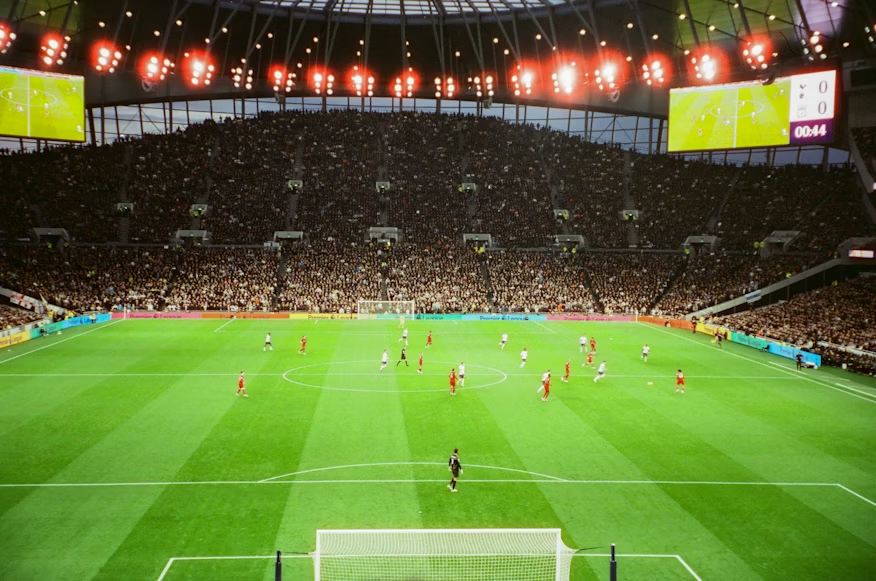
Liverpool and Crystal Palace have developed into one of English football’s compelling fixtures, particularly in the modern Premier League era. While Liverpool has dominated the all-time record with 37 victories compared to Palace’s 18 wins from 69 total meetings, the Eagles have emerged as genuine opposition to the Merseyside giants in recent seasons. The 2024-25 campaign proved transformative for this rivalry, with Crystal Palace ending a 13-match winless run against Liverpool in April 2024 and repeating the feat with a stunning 2-1 victory at Selhurst Park in September 2025, demonstrating that Palace’s defensive solidity and tactical acumen under Oliver Glasner can challenge even the most formidable opposition.
Historical Background of the Rivalry
The fixture between Crystal Palace and Liverpool stretches back to 1937, when the clubs first met in an FA Cup third-round tie. However, the modern rivalry genuinely began with both clubs’ establishment in the Premier League from its inception in 1992. For the first two decades of the Premier League era, Liverpool held an overwhelming advantage, developing a winning record that at one point included ten consecutive victories over Palace.
The Eagles’ struggles against Liverpool became so pronounced that Palace won just one league match against the Reds in their opening 16 encounters in the Premier League. This disparity reflected Liverpool’s superior resources, tactical sophistication, and consistency during the mid-1990s through early 2010s. Liverpool’s dominance at Selhurst Park was particularly stark; between 2003 and 2014, the Reds won eight of nine visits to South London, conceding remarkably few goals in the process.
However, the fundamental competitive balance began shifting around 2014, when Palace secured their first league victory at Anfield under Tony Pulis—a significant psychological breakthrough. This victory marked the beginning of a more competitive dynamic, though Liverpool continued to win the majority of subsequent meetings through the late 2010s and early 2020s.
Key Statistics and Records
The all-time head-to-head record tells the story of Liverpool’s historical dominance: 69 matches played, 37 Liverpool wins, 14 draws, and 18 Crystal Palace victories. The goal difference is equally revealing—Liverpool has scored 70 goals across all these meetings compared to Palace’s 39, a 31-goal margin that demonstrates consistent defensive issues for Palace in this fixture.
Individual player records highlight Liverpool’s attacking quality. Sadio Mane leads the way with 10 goals against Palace, while Mohamed Salah has scored 8. These numbers reflect the caliber of talent Liverpool has deployed against the Eagles. Conversely, Ismaila Sarr has proven genuinely dangerous for Palace, scoring 4 goals in 7 matches against Liverpool—making him one of Palace’s most threatening attacking players in this rivalry.
From Palace’s perspective, Jean-Philippe Mateta has emerged as their crucial forward in recent seasons. After joining Palace permanently in 2022, Mateta developed into the club’s leading goalscorer and by the 2024-25 season had amassed 29 goals in 55 Premier League appearances. His hold-up play, positioning in the box, and ability to finish half-chances have made him instrumental in Palace’s improved results against stronger opposition.
The Anfield Fortress Myth: Liverpool’s Weakening Home Advantage
While Liverpool held a near-perfect record at Anfield for decades, this fortress has shown cracks. In October 2024, Liverpool defeated Palace 1-0 through Diogo Jota’s early goal, but this result masked underlying vulnerabilities that Palace would later exploit. Liverpool’s defensive organization has become less reliable than historical standards, with the club conceding early goals and frequently requiring late interventions to secure victories.
Liverpool’s home record at Anfield still favors them substantially—the club won eight of their last ten Premier League meetings at their ground before the 2025-26 campaign. However, Palace’s 2-1 victory in September 2025 represented a turning point, ending their away winless streak and proving that Liverpool’s midfield and defensive line could be dismantled through disciplined, organized pressing.
Selhurst Park: Palace’s Fortress
Selhurst Park, located in South London’s Croydon borough, opened in 1924 and remains Crystal Palace’s home. The ground holds an official capacity of 25,486, though its record attendance of 51,482 was set in 1979 during Palace’s successful second division promotion season. The atmospheric ground with its distinctive tight configuration creates an intimidating environment for visiting teams.
Historically, Selhurst Park proved far from the fortress for Palace against Liverpool. Between 2003 and 2014, Palace won just once at home to the Reds. However, the modern era has seen Palace establish genuine home advantage. Since 2014, Palace has won at Selhurst Park against Liverpool, breaking the long-standing curse and establishing psychological momentum that has carried into recent seasons.
The ground features four stands: the Main Stand, the Whitehorse Lane Stand, the Holmesdale Road Stand, and the Arthur Wait Stand. Modern renovations completed in 2013-2014 improved facilities and aesthetics, creating a more competitive environment for European and high-profile fixtures. The away allocation accommodates 3,000 traveling supporters, creating an intense atmosphere for Liverpool supporters navigating the home crowd.
Tactical Evolution and Strategic Approaches
Liverpool under Arne Slot employs a 4-2-3-1 formation emphasizing width, pressing intensity, and rapid ball progression. Mohamed Salah operates on the right flank, cutting inward to create goal-scoring opportunities, while Cody Gakpo provides left-wing dynamism. The midfield operates with energy, attempting to win the ball high up the pitch and transitioning quickly into the attacking third.
However, this aggressive approach created vulnerabilities that Palace systematically exploited in their September 2025 victory. Palace’s direct attacking pace—measured at 2.02 meters per second, the fastest in the Premier League—allowed rapid counter-attacks against Liverpool’s stretched defensive line. When Liverpool lost possession in advanced positions, Palace’s forwards broke toward goal with devastating efficiency.
Oliver Glasner’s Palace employ a disciplined 5-3-2 or 5-2-3 formation designed to neutralize Liverpool’s attacking threats while providing structural foundation for dangerous transitions. The five-defender configuration protects against Liverpool’s width and numerical advantages in midfield. Palace’s fewest high turnovers (19 in 2025-26) and minimal high-intensity pressing reflects a pragmatic philosophy prioritizing defensive solidity over relentless pressing.
Jean-Philippe Mateta operates as the focal point, using physical presence and hold-up play to pin Liverpool’s backline and create space for attacking runners. Alongside him, playmakers like Eberechi Eze provide technical quality in the final third. Wharton and Kamada in midfield balance defensive coverage with creative distribution, enabling Palace to break effectively when turnovers occur.
Recent Match Analysis: September 2025 Encounter
The September 2025 meeting at Selhurst Park represented a watershed moment in this rivalry. Palace’s 2-1 victory ended Liverpool’s perfect opening to the season and exposed defensive weaknesses that would plague the Reds throughout the autumn.
Palace dominated the first half despite trailing 1-0, creating substantially more threatening chances than Liverpool. Ismaila Sarr’s ninth-minute goal for Palace was deserved rather than fortunate—Palace’s pressing forced Liverpool into defensive errors, and their direct transitions capitalized on available space. Liverpool’s right-back position proved particularly vulnerable, with Sarr repeatedly finding space down the flank.
Liverpool’s goalkeeper Alisson became the decisive factor in the opening 45 minutes, making critical saves from Yeremy Pino, Daniel Munoz, and Jean-Philippe Mateta (who also hit the crossbar). Had Palace converted even two of their clear chances, Liverpool would have faced an insurmountable deficit. This suggested that Palace’s tactical approach—focused on structure and transition rather than possession dominance—could unlock Liverpool’s defensive vulnerabilities.
Federico Chiesa’s 87th-minute equalizer gave Liverpool genuine hope of salvaging a point, but Eddie Nketiah delivered the decisive blow in the 97th minute, securing Palace’s deserved victory. The result vindicated Glasner’s post-match comments: “We deserved the win. We played an amazing first half and had a deserved lead. To overcome the pressure of Liverpool—they deserved an equalizer—but I’m thrilled with our team’s response.”
October 2025: Anfield Response
The subsequent October 2025 encounter at Anfield saw Liverpool respond with a 1-0 victory, though the convincing scoreline masked another competitive match. Diogo Jota’s early goal provided breathing room, but Palace continued creating opportunities throughout the match. Liverpool’s improved tactical adjustments—particularly deploying Cody Gakpo as a left winger rather than maintaining rigidity—provided greater width and attacking dynamism that Palace’s defense ultimately couldn’t contain.
This victory prevented Palace from achieving a rare domestic double over Liverpool, but the narrow margin suggested the fixture had genuinely become competitive rather than predictably favoring the Reds.
Community Shield and Trophy Competition
The August 2025 Community Shield final at Wembley provided additional evidence of Palace’s emerging strength. The match ended 2-2, with both sides creating scoring opportunities and demonstrating quality football. Palace’s subsequent penalty shootout victory added significant psychological momentum to the Eagles’ season and served as a marker of their belief in challenging the established elite.
Jean-Philippe Mateta scored from the penalty spot during the shootout, demonstrating composure in high-pressure situations. The victory represented Palace’s second trophy in recent seasons (following their 2025 FA Cup triumph) and indicated that Glasner’s tenure had genuinely elevated the club’s competitive standing.
Notable Players and Performers
Crystal Palace’s Weapons
Jean-Philippe Mateta serves as Palace’s primary attacking force. The French international’s 16-goal Premier League tally in 2024-25 (his career-high) established him as one of the division’s most dangerous center-forwards in open play. His physical attributes, positioning intelligence, and clinical finishing make him perpetually capable of decisive contributions against elite defenders. Against Liverpool specifically, Mateta’s hold-up play provides Palace with a release mechanism when pressing applies intensity.
Eberechi Eze represents Palace’s creative heartbeat. The England international’s technical quality, dribbling ability, and shooting range enable Palace to threaten opposition defensively structured to prevent direct play. Eze’s April 2024 goal against Liverpool—a significant moment ending Palace’s winless run—demonstrated his capacity for crucial contributions in high-stakes fixtures.
Ismaila Sarr emerged as exceptionally dangerous against Liverpool specifically. His four goals in seven matches against the Reds represent the most prolific individual record any Palace player holds against Liverpool. Sarr’s directness, pace, and movement make him difficult for Liverpool’s fullbacks to contain, particularly when deployed against transitioning defensive shapes.
Liverpool’s Attacking Armory
Mohamed Salah remains the Reds’ most distinguished attacking weapon. The Egyptian winger’s eight goals against Palace rank second only to Sadio Mane’s tally and reflect his consistent threat in this fixture. However, Salah’s form in the 2025-26 season became complicated by contractual and interpersonal issues with manager Arne Slot, reducing his availability and consistency during crucial periods.
Virgil van Dijk operates as Liverpool’s defensive anchor and leadership figure. The Dutch defender’s aerial dominance, positioning intelligence, and communication establish the framework for Liverpool’s defensive approach. Van Dijk’s ability to read play and sweep behind pressing defenders provides crucial cover when Liverpool’s aggressive pressing breaks down against Palace’s direct attacking approach.
Arne Slot replaced Jurgen Klopp as Liverpool manager and introduced tactical adjustments emphasizing vertical progression and width. Slot’s deployment of multiple attacking midfielders and full-backs in advanced positions aims to overcome Palace’s defensive structure through numerical advantages in wide areas. However, this approach creates vulnerabilities to Palace’s counter-attacking transitions.
Practical Information for Matchday Attendance
Selhurst Park Venue Details
Location: Selhurst Park is situated in Croydon, South London, approximately 12 miles from central London. The stadium’s South London location provides accessibility via public transportation and parking facilities.
Capacity: The ground holds 25,486 supporters, with away allocations typically providing 3,000 spaces for visiting supporters. The ground’s configuration creates an intimidating atmosphere during high-stakes encounters.
Getting There: Selhurst Park is accessible via Selhurst train station (Southern Railway), located a 10-minute walk from the ground. The Croydon tram network also provides connections. Parking is available in surrounding areas, though matchday congestion is substantial.
Stadium Tours: Crystal Palace offers stadium tours on non-matchday occasions, providing access to the dressing rooms, players’ tunnel, and pitch-side areas. Tours typically cost £15-20 and provide insight into the club’s facilities and history.
Anfield Venue Details
Location: Anfield is located in Northwest England, approximately 3 miles from Liverpool city center. The stadium occupies the same location since 1892 when Liverpool FC was founded.
Capacity: Anfield currently holds approximately 61,000 supporters following recent expansion. The ground’s four stands—the Kop, the Anfield Road End, the Main Stand, and the Sir Kenny Dalglish Stand—create one of football’s most distinctive atmospheres.
Getting There: Anfield is accessible via Anfield train station on the Merseyrail network, located approximately 5 minutes’ walk from the ground. The city’s bus network also provides connections. Limited parking surrounds the ground; most supporters utilize public transportation.
Stadium Tours: Liverpool offers comprehensive stadium tours costing £19-34 per adult. Tours include the dressing rooms, players’ tunnel, press conference room, and the iconic “This Is Anfield” sign. The LFC Museum provides interactive exhibits exploring the club’s legendary history.
Matchday Experience: Liverpool offers premium matchday hospitality packages, with prices ranging from £150-500+ depending on seating location and included amenities.
Seasonal Considerations and Form Patterns
Crystal Palace’s form typically improves in the spring months, when the pitch conditions favor their direct, transition-based approach. The Eagles have demonstrated particular strength in April and May in recent seasons, with their April 2024 victory over Liverpool exemplifying this seasonal pattern. Conversely, Palace often struggles during congested fixture schedules, particularly in December and January when fixture frequency places strain on their relatively modest squad depth.
Liverpool performs most consistently during autumn months (September-November) when manager integration and tactical cohesion peaks. However, the Reds have shown vulnerability during scheduling congestion, as demonstrated by their mixed results in the 2025-26 season when European commitments overlapped with Premier League fixtures.
Frequently Asked Questions
What is the all-time head-to-head record between Crystal Palace and Liverpool?
Liverpool leads significantly with 37 victories, 14 draws, and 18 Crystal Palace wins from 69 total meetings. Liverpool’s dominance reflects their superior resources and consistency across several decades, though Palace has narrowed the gap considerably in recent seasons.
When did Crystal Palace last beat Liverpool in the Premier League?
Crystal Palace achieved a memorable 1-0 victory at Anfield in April 2024, with Eberechi Eze scoring the decisive goal. This victory ended a 13-match winless run and provided significant psychological momentum for Palace’s revival under Oliver Glasner.
How many goals has Mohamed Salah scored against Crystal Palace?
Mohamed Salah has scored 8 goals in matches against Crystal Palace across all competitions, ranking second only to Sadio Mane’s 10-goal tally. Salah’s threat in wide areas and his conversion efficiency make him consistently dangerous in this fixture.
What is the capacity of Selhurst Park?
Selhurst Park holds 25,486 supporters, with away allocations typically providing 3,000 spaces. The ground’s record attendance of 51,482 was set in May 1979 during Crystal Palace’s successful second division promotion campaign.
Which player has the best scoring record for Crystal Palace against Liverpool?
Ismaila Sarr holds the best individual record for Crystal Palace against Liverpool, having scored 4 goals in 7 matches. Sarr’s directness and pace make him particularly effective against Liverpool’s fullbacks in transition scenarios.
How often do Crystal Palace and Liverpool play each other?
Under normal Premier League scheduling, the clubs meet twice annually—once at Selhurst Park and once at Anfield. They may meet additional times in cup competitions such as the FA Cup or League Cup.
What is Oliver Glasner’s record as Crystal Palace manager?
Oliver Glasner has transformed Crystal Palace since his February 2024 appointment. Under his management, Palace won the 2025 FA Cup and achieved a 17-match unbeaten run, establishing themselves as a competitive force against elite opposition.
How does Crystal Palace’s tactical approach differ from Liverpool’s?
Crystal Palace employs a disciplined, defensively-structured approach prioritizing organization and transition efficiency. Liverpool under Arne Slot emphasizes aggressive pressing, positional play, and rapid ball progression through the attacking third. Palace’s direct attacking pace (2.02 m/s) is the fastest in the Premier League, exploiting Liverpool’s defensive transitions.
What injuries or suspensions have affected recent fixtures?
Mohamed Salah’s absence through suspension and international duty (Africa Cup of Nations) significantly impacted Liverpool’s 2025-26 campaign. Virgil van Dijk’s leadership through these absences proved crucial in stabilizing Liverpool’s defensive structure.
Which team has the superior home record in this fixture?
Liverpool holds a superior home record, winning 8 of their last 10 matches at Anfield against Palace. However, Palace’s 2-1 victory in September 2025 represents an important breakthrough in narrowing Liverpool’s home advantage.
When is the next scheduled meeting between Crystal Palace and Liverpool?
The clubs are scheduled to meet on April 25, 2026, at Anfield during the 2025-26 Premier League season, with additional potential encounters depending on FA Cup or League Cup progression.
What factors determine the outcome of Crystal Palace vs Liverpool matches?
Liverpool’s pressing intensity and attacking quality in wide areas versus Palace’s defensive organization and counter-attacking threat represent the crucial battle lines. Referee management of physical contact, particularly in midfield, significantly influences the fixture’s flow. Weather conditions favoring direct play advantage Palace, while possession-based weather favors Liverpool.
Summary
Crystal Palace’s emergence as a genuinely competitive opponent for Liverpool represents one of modern English football’s significant shifts. The Eagles’ September 2025 victory, coupled with their FA Cup triumph and Community Shield penalty success, established Palace as a team capable of challenging the established elite. Oliver Glasner’s tactical sophistication, combined with the physical and technical quality of players like Jean-Philippe Mateta, Eberechi Eze, and Ismaila Sarr, has created a formidable tactical unit.
Liverpool remains the favorite in this fixture due to their superior historical record and attacking quality, yet the competitive balance has fundamentally shifted. The fixture now represents a genuinely compelling encounter between two high-quality teams employing contrasting tactical philosophies—Liverpool’s aggressive pressing versus Palace’s disciplined defensive structure and devastating transitions.
For supporters of both clubs, upcoming meetings promise compelling football that showcases different approaches to elite competition. Palace’s improvement suggests future encounters will be increasingly competitive, potentially disrupting Liverpool’s historical dominance in this fixture.
For More UK Football Coverage and Trending News
For comprehensive coverage of football news, transfer updates, and Premier League analysis, explore these authoritative sources:
- Bristol Chronicle: Latest Football News and Updates
- Norwich City Standings and Premier League Table Analysis
- Crystal Palace Latest News and Match Updates
- Liverpool FC Transfer News and Squad Information
- Premier League Standings and Fixture Schedule
- UK Sports News and Breaking Updates
- Official Premier League Website