
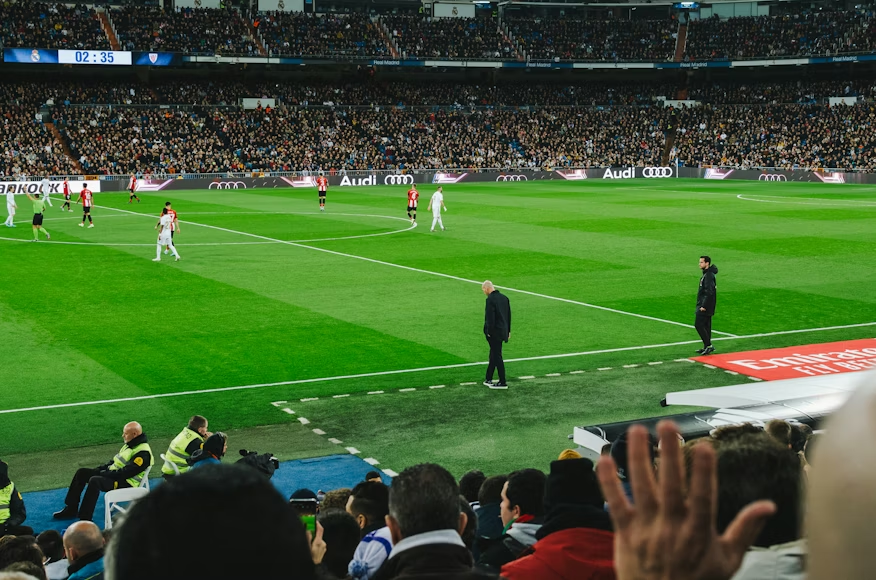
Real Madrid currently occupies the second position in the 2025-26 La Liga standings with 42 points from 18 matches, trailing Barcelona by just one point. Villarreal CF sits in third place with 35 points from 15 matches, maintaining strong defensive form with only 13 goals conceded—the best defensive record in La Liga. This article provides an in-depth analysis of both teams’ standings, performance metrics, head-to-head records, tactical approaches, and their significance in the ongoing title race.
Current La Liga Standings Overview
Real Madrid and Villarreal CF represent two of La Liga’s most compelling narratives in the 2025-26 season. As of late December 2025, Real Madrid maintains their position as the second-strongest force in Spanish football, having accumulated 42 points through 18 league matches. Their record of 13 wins, 3 draws, and only 2 losses demonstrates remarkable consistency throughout the season’s first half. The club has demonstrated their attacking prowess by scoring 36 goals while maintaining a relatively solid defensive foundation with 16 goals conceded, resulting in a positive goal difference of +20.
Villarreal CF, under the guidance of manager Marcelino García Toral, has emerged as an unexpected title challenger and sits in third place with 35 points from 15 matches. The Yellow Submarine has recorded 11 victories, 2 draws, and 2 defeats, showcasing an impressive win percentage of 73.3 percent. More remarkably, Villarreal boasts the best defensive record in all of La Liga with only 13 goals conceded across their 15 matches—a defensive excellence that mirrors their attacking contributions of 31 goals. Their goal difference of +18 places them in serious contention for Champions League qualification and potentially more.
The gap between second and third place represents only seven points, indicating that the title race remains exceptionally competitive and unpredictable. Both teams have demonstrated the quality necessary to compete at the highest level, yet their paths to success diverge significantly in tactical philosophy and squad composition.
Head-to-Head Record and Historical Context
The historical matchup between Real Madrid and Villarreal CF reveals a one-sided dominance that has characterized their relationship over decades of competition. Throughout their 54 meetings across all competitions, Real Madrid has emerged victorious on 31 occasions, drawing 17 matches, while Villarreal has managed to secure victory in just 6 encounters. This record demonstrates the significant gap in pedigree and consistency between these two institutions, though recent seasons have seen Villarreal narrow this disparity considerably.
In La Liga specifically, the teams have contested 51 matches, with Real Madrid winning 28 times compared to Villarreal’s 6 victories and 17 draws. However, a more nuanced examination of their recent meetings suggests a shifting dynamic. Over their last nine La Liga encounters, Real Madrid has won only four matches, with three draws and two Villarreal victories—a reversal of the historical trend that underscores Villarreal’s tactical evolution and improved competitiveness.
The most recent meetings between these sides have been particularly telling. In March 2025, Villarreal hosted Real Madrid and fell to a 2-1 defeat at Estadio de la Cerámica, a loss that came after Juan Foyth had given the hosts an early lead. Kylian Mbappé responded with a brace to secure victory for Los Blancos. Prior to this fixture, Real Madrid had registered a convincing 2-0 triumph in October 2024, also at the Bernabéu, establishing their superiority in recent direct confrontations. However, the May 2024 encounter between these sides ended in a dramatic 4-4 draw, showcasing the attacking potential both teams possess.
Remarkably, Real Madrid has not recorded a victory at Estadio de la Cerámica since 2017, when they won 3-2 in a thrilling comeback match. This historical fact presents significant psychological advantage for Villarreal in home matches and suggests that their defensive organization has substantially improved to contain Real Madrid’s potent attack.
Current Season Performance and Form Analysis
Real Madrid’s Campaign
Real Madrid’s 2025-26 season represents a campaign of sustained excellence marked by intermittent challenges. The reigning champions began the season with considerable momentum, establishing themselves as title contenders alongside Barcelona. However, their journey has not been without setbacks, including a shocking 5-2 defeat to Atlético Madrid in the Madrid derby that temporarily derailed their title aspirations. Despite this reversal, Los Blancos have responded professionally, returning to winning ways and maintaining consistency through 18 league matches.
The offensive contribution from Real Madrid has been nothing short of spectacular, with Kylian Mbappé leading the charge as the team’s primary goalscorer. The French forward has already accumulated 17 La Liga goals in just 17 appearances, establishing himself as one of Europe’s most prolific strikers. Supporting Mbappé’s efforts are the creative contributions of Vinícius Júnior, who has recorded 5 assists alongside his scoring contributions, and the versatile Arda Güler, who has provided both goals and assists to the team’s attacking play. The midfield presence of Federico Valverde and Jude Bellingham provides stability and creative capabilities from deep positions.
Defensively, Real Madrid has maintained a respectable record with 16 goals conceded, though their away form has occasionally exposed vulnerabilities. Their home record at the Santiago Bernabéu remains particularly strong, creating a fortress-like environment that has proved difficult for visiting teams to penetrate. The defensive unit includes experienced players such as Aurélien Tchouaméni, Éder Militão, and goalkeeper Thibaut Courtois, who has made crucial saves throughout the campaign.
Villarreal’s Exceptional Campaign
Villarreal’s trajectory in the 2025-26 season has been characterized by surprise and excellence, defying pre-season expectations about their competitive level. Under Marcelino’s astute management, the club has cultivated a balanced team that excels both offensively and defensively, with particular emphasis on organizational structure and transition football. Their recent performances have elevated them into genuine title contention, a position many observers did not anticipate given their fifth-place finish in the previous campaign.
The Yellow Submarine’s defensive excellence has been their hallmark, with only 13 goals conceded across 15 matches. This defensive solidity stems from organized zonal marking, compact defensive lines, and effective pressing in key areas of the pitch. Central defenders Juan Foyth and Renato Veiga have formed a formidable partnership, supported by the organizational brilliance of midfielder Thomas Partey, the former Arsenal player who has rediscovered his best form in the Spanish league.
Offensively, Villarreal has been propelled by the prolific contributions of Alberto Moleiro, who has scored 6 goals despite limited playing time, and Tajon Buchanan, who has registered 5 goals as a consistent presence in the team’s attacking line. Gerard Moreno, their experienced striker, has contributed 4 goals in limited appearances due to injury concerns. The creative orchestration from midfielders like Santi Comesaña and Dani Parejo has provided the foundation for their attacking play, with Alex Baena emerging as their creative fulcrum—involved in nearly 37 percent of Villarreal’s goals this season.
Their home form has been particularly strong, with 72 percent of their points collected at Estadio de la Cerámica, suggesting that their performances improve substantially when playing in front of their supporters. This disparity between home and away form will be crucial to monitor as the season progresses toward its conclusion.
Tactical Approaches and Match Dynamics
Real Madrid’s Tactical Philosophy
Real Madrid under Xabi Alonso operates a fluid attacking system that emphasizes ball possession and creative interplay through the midfield. The team typically employs a 3-4-1-2 formation in recent matches, which provides flexibility both defensively and offensively. The attacking shape often transitions into different configurations depending on opposition setup and in-game requirements, with overlapping full-backs creating additional width and overloading opportunities for the team’s attacking players.
The team’s approach centers on controlling the tempo through midfield dominance, with Federico Valverde and Aurélien Tchouaméni providing the platform for creative players like Arda Güler to orchestrate attacking moves. Mbappé’s positioning as the primary striker allows him to operate in various attacking zones, creating unpredictability that opposing defenses must account for. Vinícius Júnior’s presence on the left flank provides additional attacking threat through his dribbling abilities and direct running style.
Pressing is selective rather than all-consuming, with Real Madrid preferring to allow opposition the ball in deeper areas before implementing triggers that force turnovers in transition zones. This approach has proven effective at home but has occasionally exposed vulnerabilities away from the Bernabéu, where their pressing intensity reportedly decreases by approximately 12 percent compared to home fixtures.
Villarreal’s Defensive Structure
Marcelino García Toral has implemented a distinctly different tactical approach, prioritizing defensive organization and structural discipline above all other considerations. Villarreal typically operates a 4-4-2 formation with robust defensive lines and compact spacing that limits opposition’s creative opportunities in dangerous areas. The defensive approach emphasizes positioning over individual defensive prowess, ensuring that attacking players maintain responsibility for defensive contributions.
The pressing strategy employed by Villarreal is highly organized and positioned, with triggers implemented in specific zones to force turnovers rather than an all-over pitch press. This calculated approach to pressing has proven effective in recent seasons, as evidenced by their improved defensive statistics. The midfield provides essential protection for the defensive line, with Thomas Partey’s ball-winning capabilities and spatial awareness enabling quick transitions from defense to attack.
Counter-attacking represents a significant element of Villarreal’s attacking strategy, with the team looking to exploit spaces created by opposing teams’ attacking moves. The speed of Buchanan and Moleiro in transition situations creates dangerous opportunities from limited attacking possession, a tactical approach that relies on efficiency rather than overwhelming attacking dominance.
Key Statistical Metrics and Performance Indicators
The statistical comparison between Real Madrid and Villarreal reveals the distinct philosophical differences that characterize their approaches. Real Madrid’s attacking output of 36 goals in 18 matches translates to 2.0 goals per game, demonstrating their consistent threat in the final third. Villarreal’s 31 goals in 15 matches represents 2.07 goals per game, a nearly identical rate that suggests comparable attacking efficiency despite substantially different tactical approaches.
The defensive statistics present a more meaningful distinction. Real Madrid’s 16 goals conceded in 18 matches yields 0.89 goals conceded per game, a respectable figure that falls short of Villarreal’s remarkable 0.87 goals conceded per game across 15 matches. Both teams have demonstrated the defensive quality necessary to compete at the highest level, though Villarreal’s absolute total of only 13 goals conceded represents exceptional defensive stability.
Possession statistics typically favor Real Madrid, who average higher possession percentages in matches and control games through ball retention. Villarreal’s average possession of approximately 47.6 percent reflects their acceptance of lower possession totals in exchange for defensive organization and counter-attacking opportunities. This philosophical difference represents a fundamental distinction in how each team approaches competitive fixtures.
Expected goals data from recent matches suggests both teams create meaningful scoring opportunities at relatively similar rates, though the efficiency with which they convert these opportunities varies. Mbappé’s conversion rate of approximately 45 percent of his shots represents exceptional finishing, while Villarreal’s collective conversion efficiency remains respectable despite featuring less prolific individual strikers.
Defensive Excellence and Goal Concession Analysis
Villarreal’s defensive record warrants particular examination given its status as La Liga’s most impressive backline. The defensive excellence stems from multiple contributing factors, including compressed defensive lines that reduce space for opposition attackers to operate, effective high pressing that disrupts opposition build-up play, and individual defensive contributions from Juan Foyth and Renato Veiga.
Their home record of only 4 goals conceded in 8 matches demonstrates particular defensive strength when playing at Estadio de la Cerámica. Away from home, they have conceded 9 goals in 7 matches, indicating that their defensive setup works more effectively in home conditions where they can establish their preferred shape without adapting to away-ground disadvantages.
Real Madrid’s defensive approach prioritizes regaining possession quickly through pressing rather than allowing opposition unlimited attacking opportunities. Their 2 clean sheets in recent fixtures represent adequate rather than exceptional defensive performance, though the 8 clean sheets accumulated across 18 matches demonstrates substantial defensive stability. Goalkeeper Thibaut Courtois has provided crucial contributions, making 34 saves in Liga matches while maintaining a relatively low goals-conceded average.
Goals Scored and Offensive Capabilities
Real Madrid’s attacking output has been consistently impressive throughout the 2025-26 campaign, with multiple goal scorers contributing to their impressive total. Mbappé’s 17 goals represent the primary attacking contribution, but the team has benefited from additional sources including Vinícius Júnior’s movement and positioning, and Arda Güler’s emergence as a secondary scoring option. The team’s ability to score from various situations, including open play, set pieces, and transitions, provides tactical flexibility that opposing defenses must account for.
Villarreal’s goal-scoring responsibilities have been distributed more broadly across their squad, with Moleiro’s 6 goals, Buchanan’s 5 goals, and Moreno’s 4 goals providing the primary attacking threat. This distribution of goal-scoring responsibilities reduces dependence on any individual player and provides resilience if key attackers become unavailable through injury. The team’s recent tactical organization has improved their efficiency in creating dangerous attacking situations despite lower possession percentages.
Practical Information: Stadium, Atmosphere, and Match Day Details
Santiago Bernabéu (Real Madrid’s Home)
The Santiago Bernabéu represents one of European football’s most iconic stadiums, serving as Real Madrid’s fortress for over 80 years. The modernized facility underwent significant renovations recently, introducing state-of-the-art infrastructure while maintaining its traditional character. The stadium’s capacity of approximately 81,000 creates an intimidating atmosphere for visiting teams, with passionate Madridistas providing constant vocal support for their team.
Match days at the Bernabéu typically occur on weekends, with kick-off times varying between 15:15 and 21:00 depending on television schedules. The stadium’s proximity to central Madrid provides excellent public transportation access through metro connections and bus services. Parking facilities are available in underground structures beneath the stadium, though advance booking is recommended for high-profile fixtures.
Ticket availability for Real Madrid matches is typically limited, with season ticket holders receiving priority allocation before public sales. Prices vary significantly depending on opposition and match importance, ranging from €50 for lower-tier seating to €300+ for premium locations. Match day atmosphere begins approximately 3-4 hours before kick-off, with supporters gathering in surrounding plazas.
Estadio de la Cerámica (Villarreal’s Home)
Estadio de la Cerámica has served as Villarreal’s home since 1923, representing one of Spain’s most traditional football stadiums. The facility underwent capacity expansion in recent years, increasing its current capacity to approximately 23,500. The intimate atmosphere created by the close proximity of supporters to the pitch has contributed to Villarreal’s strong home record.
Located in Castellón de la Plana, approximately 50 kilometers from Valencia, the stadium is accessible via regional trains and buses. The relatively smaller capacity compared to Spain’s largest stadiums creates an intensely compact atmosphere that particularly disadvantages visiting teams. Parking around the stadium is limited, necessitating advance planning for attending supporters.
Ticket availability at Villarreal matches is generally more accessible than at larger stadiums, with regular availability for non-El Clásico fixtures. Prices typically range from €20 to €100 depending on location and opponent quality. The intimate nature of the stadium creates stronger personal connections between supporters and players compared to larger facilities.
Recent Head-to-Head Encounters and Match Analysis
October 2025: Real Madrid 3-1 Villarreal
The most recent meeting between these sides occurred in October 2025 at the Bernabéu, with Real Madrid securing a convincing 3-1 victory. The match demonstrated Real Madrid’s attacking superiority in home conditions, with Vinícius Júnior scoring twice and Mbappé contributing the third goal. Villarreal’s single goal, likely from Moleiro or Buchanan, proved insufficient to secure anything from the fixture despite their defensive organization.
The match illustrated Real Madrid’s ability to impose their attacking play on opposition defenses when operating in home conditions, where they maintain higher possession percentages and greater freedom to express their attacking intent. Real Madrid’s physical presence and technical superiority proved decisive in determining the fixture’s outcome.
March 2025: Villarreal 1-2 Real Madrid
The previous fixture at Estadio de la Cerámica saw Real Madrid’s away-game vulnerabilities emerge, though they ultimately secured the victory. Juan Foyth gave Villarreal an early lead with a set-piece header, but Mbappé’s quick responses through the first half—scoring in the 17th and 23rd minutes—secured the three points for Los Blancos. The match’s halfway point saw Real Madrid dominating despite Villarreal’s early setback, establishing the pattern that would determine the fixture’s ultimate result.
Tactical Battles and Match Key Areas
Midfield Control
The midfield area represents perhaps the most decisive battleground in Real Madrid versus Villarreal encounters. Real Madrid’s superior technical quality in midfield, combined with their preference for higher possession percentages, typically allows them to control the game’s tempo. Federico Valverde and Aurélien Tchouaméni provide the foundation upon which Real’s attacking play is constructed, while Arda Güler’s creative contributions enable progression toward Villarreal’s goal.
Villarreal counters through Thomas Partey’s defensive positioning and spatial awareness, creating barriers that disrupt Real Madrid’s attacking progression. The Yellow Submarine’s midfield approach prioritizes maintaining compactness and forcing Real Madrid toward wider areas where their overlapping full-backs can be contained more effectively.
Villarreal’s High Press vs Real Madrid’s Build-Up
Villarreal’s organized pressing strategy often targets Real Madrid’s defensive third, attempting to force turnovers that create transition opportunities. When effectively implemented, this pressing generates turnovers that Villarreal converts into dangerous counter-attacks through Buchanan and Moleiro’s movement.
Real Madrid has generally demonstrated resilience against this pressing, with their technical quality enabling them to progress the ball through pressing triggers. Their occasional vulnerability—noted in away fixtures—occasionally permits Villarreal to generate high-quality scoring opportunities from disrupted build-up play.
Set-Piece Proficiency
Real Madrid has demonstrated variability in set-piece effectiveness, with both offensive and defensive vulnerabilities evident in recent fixtures. Villarreal has developed notable proficiency in attacking set pieces, with Foyth’s threat on corners representing a particular concern for defending teams.
Current La Liga Title Race Context
The 2025-26 La Liga title race remains remarkably competitive, with Barcelona currently leading the standings by a single point ahead of second-placed Real Madrid. This ultra-competitive landscape suggests that the final championship outcome will be determined by consistency, injury management, and late-season form. Villarreal’s unexpected emergence as a potential contender adds additional unpredictability to the title race, creating the possibility of a three-way battle for Spanish football’s most prestigious honor.
Real Madrid’s experience in title-winning campaigns provides psychological advantage, while their home record at the Bernabéu offers confidence entering the season’s second half. However, their away-game vulnerabilities present potential weaknesses that Barcelona or other competitors could exploit. The squad’s depth across all positions provides insurance against injury disruptions, a factor that has proven decisive in previous title races.
Villarreal’s trajectory suggests potential Champions League qualification at minimum, with their current position and point accumulation rate supporting top-four finish likelihood. A potential title challenge remains possible if their defensive excellence translates across the entire season without defensive regression.
Frequently Asked Questions
What is Real Madrid’s current La Liga position as of December 2025?
Real Madrid occupies second place in the 2025-26 La Liga standings with 42 points accumulated from 18 matches. The team maintains a winning record of 13 victories, 3 draws, and only 2 losses, trailing Barcelona by just one point in an exceptionally competitive title race.
How many goals has Villarreal conceded this season in La Liga?
Villarreal has conceded only 13 goals across 15 La Liga matches, establishing themselves as the league’s best defensive team. This exceptional defensive record reflects their organized tactical approach under manager Marcelino García Toral and strong individual performances from defenders Juan Foyth and Renato Veiga.
What is the head-to-head record between Real Madrid and Villarreal?
Throughout their 54 meetings across all competitions, Real Madrid has won 31 matches, drawn 17, and lost only 6. In La Liga specifically, across 51 encounters, Real Madrid has achieved 28 victories compared to Villarreal’s 6, though recent seasons show a narrowing of this historical gap.
How many goals has Kylian Mbappé scored for Real Madrid this La Liga season?
Kylian Mbappé has scored 17 goals in 17 La Liga appearances for Real Madrid during the 2025-26 campaign, establishing himself as the league’s most prolific striker and the primary attacking contributor to Los Blancos’ offensive output.
When was the last time Real Madrid won at Estadio de la Cerámica against Villarreal?
Real Madrid’s last victory at Villarreal’s home stadium occurred in 2017, when they secured a dramatic 3-2 comeback victory. This extended winless run away to Villarreal represents a significant psychological advantage for the Yellow Submarine in home fixtures.
What is Villarreal’s defensive record in home matches specifically?
Villarreal has conceded only 4 goals in 8 home matches, demonstrating exceptional defensive organization when playing at Estadio de la Cerámica. This home defensive excellence has been a significant factor in their accumulation of 72 percent of their total league points at their own stadium.
How many assists has Vinícius Júnior recorded for Real Madrid this season?
Vinícius Júnior has provided 5 assists across 17 La Liga appearances while also contributing goals through his presence on the left flank. His creative contributions complement his attacking play, establishing him as a complete attacking threat for Real Madrid.
Which Villarreal player has emerged as their most dangerous attacking threat this season?
Alberto Moleiro has been Villarreal’s most prolific goalscorer with 6 goals, supported by Tajon Buchanan’s 5 goals. In creative terms, Alex Baena has emerged as their most influential attacking midfielder, involved in nearly 37 percent of Villarreal’s goal contributions this season.
What is the goal difference between Real Madrid and Villarreal?
Real Madrid has a goal difference of +20 (36 goals for, 16 against), while Villarreal maintains a goal difference of +18 (31 goals for, 13 against). This relatively similar goal difference despite Real Madrid’s superior attacking output reflects Villarreal’s exceptional defensive organization.
How does Villarreal’s away record compare to their home record?
Villarreal has demonstrated significant disparity between their home and away performances. Their 4 goals conceded in 8 home matches contrasts sharply with 9 goals conceded in 7 away matches, indicating that their defensive setup functions considerably more effectively in home conditions.
What tactical formation does Villarreal typically employ under Marcelino?
Villarreal operates a 4-4-2 formation characterized by compact defensive lines, organized pressing, and emphasis on counter-attacking transitions. This structured approach prioritizes defensive stability over possession control, enabling efficiency with lower possession percentages.
How many points separate Real Madrid from Barcelona in the current title race?
As of late December 2025, Barcelona leads the La Liga standings by just one point ahead of second-placed Real Madrid, creating an exceptionally competitive title race. The minimal point gap suggests that the championship outcome will be determined by consistency throughout the season’s remaining fixtures.
What is Villarreal’s potential for winning La Liga this season?
While Villarreal’s current form and defensive excellence suggest Champions League qualification likelihood, their historical tradition and squad composition suggest top-four finish probability exceeds title-winning probability. However, their unexpected emergence as genuine contenders demonstrates that late-season surprises remain possible in Spanish football.
Has Real Madrid demonstrated any particular vulnerabilities away from the Bernabéu?
Real Madrid’s pressing intensity reportedly decreases approximately 12 percent in away fixtures compared to home games, creating potential vulnerabilities against high-pressing opposition. Additionally, their expected goals difference narrows by 0.7 in away fixtures compared to home performances, indicating reduced dominance on opposition grounds.
Which goalkeeper is responsible for Villarreal’s defensive excellence?
Villarreal’s defensive organization stems from team structure rather than individual goalkeeper excellence, though their shot-stopping contributions have been respectable. The team’s success reflects their defensive zonal marking system and compact lines that prevent scoring opportunities creation rather than depending on goalkeeper extraordinary performances.
Conclusion
The 2025-26 La Liga season has presented football enthusiasts with a compelling narrative involving Real Madrid’s experienced quest for championship glory and Villarreal’s unexpected emergence as genuine title contenders. Real Madrid’s position as second-place holders with 42 points reflects consistent excellence marred by occasional vulnerabilities, particularly in away fixtures. Their offensive output led by Kylian Mbappé’s prolific finishing and supported by Vinícius Júnior’s creative contributions establishes them as formidable attacking force capable of overwhelming opposition defenses.
Villarreal’s remarkable defensive organization and unexpected rise to third place with 35 points from 15 matches demonstrates manager Marcelino García Toral’s tactical acumen and squad development. Their league-leading defensive record of only 13 goals conceded reflects commitment to organizational discipline and structural clarity that enables them to compete despite lower possession percentages than elite Spanish football competitors.
The direct head-to-head record between these clubs and their upcoming encounters throughout the season will provide crucial insights into whether Villarreal can sustain their unexpected form or whether Real Madrid’s experience and quality will ultimately prove decisive. The minimal point gaps separating the title contenders ensure that every remaining fixture carries significant championship implications, maintaining viewer interest and competitive tension throughout the remainder of the campaign.
Additional Resources and Related Content
For more UK-focused stories and trending news covering similar topics, explore these comprehensive resources:
- Crystal Palace vs Liverpool Complete Analysis – In-depth tactical analysis of another Premier League/La Liga equivalent fixture
- Liga Portugal Standings Complete Guide – Comprehensive coverage of Portuguese football’s top division
- Where to Watch Real Madrid Barcelona Viewing Guide – Complete streaming and broadcast information for major Spanish fixtures
- Champions League Standings 2025-26 – European competition standings featuring both Real Madrid and Villarreal
- BBC News – Breaking news and comprehensive sports coverage from the British Broadcasting Corporation
- GOV.UK – Official government resources and information services